
The First Literacy
A play-based daycare curriculum built around a 10,000 sq ft gym
Your child learns with their whole body. We built a whole building for it.
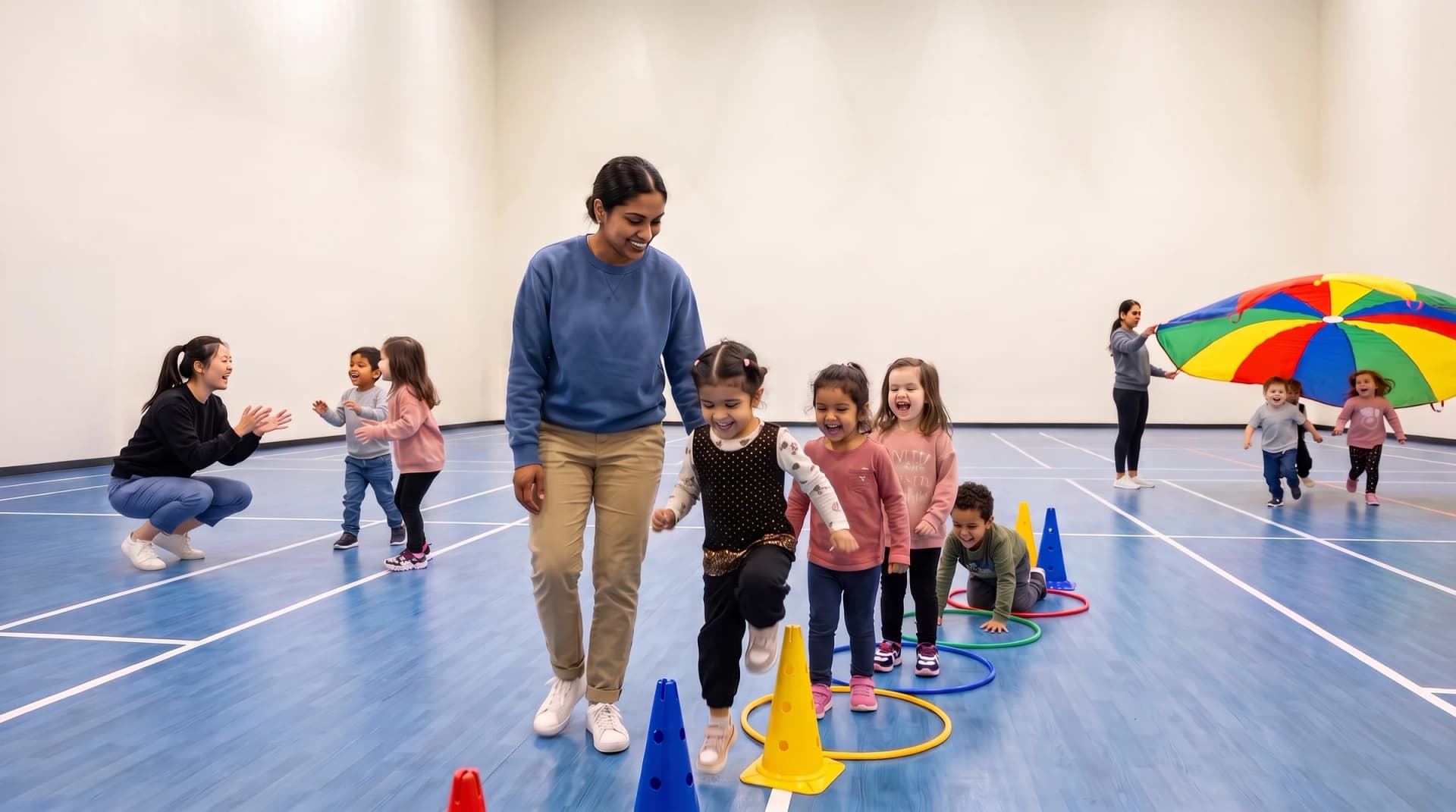
At Playbox, children spend part of every single day in a 10,000 square foot gymnasium, running, climbing, throwing, and dancing. Not as a treat. As the way they learn. Because for a child under five, movement is not a break from learning. Movement is how the brain gets built.
Come stand in the gym. We will call you back within 24 hours.
We are raising the least active generation of young children on record. Here is what that costs them.
Your child was built to move. In the first five years, the brain grows faster than at any other time in life, and it grows through the body: through crawling, climbing, balancing, throwing, and running. Movement is not what children do instead of learning. In these years, it is one of the main ways learning happens. That is the whole idea behind our movement-based, play-based curriculum in Cloverdale, Surrey.
The early years are also a closing window. This is the critical window to build fundamental movement skills, and motor-development researchers find that children who miss it tend to hit what they call a proficiency barrier: the skills start to feel too hard, and those children are more likely to opt out of active play and sport for the rest of childhood. It is an association, not a guarantee, but the direction is clear, and the window does not stay open. (Source: Stodden et al., developmental model of motor skill competence.)
But most young children are not getting nearly enough movement, and the numbers are worse than most parents realize.
of a young child's waking hours are spent sitting still, sedentary rather than moving.
ParticipACTION; Canadian Health Measures Survey.
62% of the day
Even in centre-based childcare, a young child is sedentary about 62 percent of the time, no less than being cared for at home.
Canadian Health Measures Survey; Journal of Sport and Health Science.
Nearly 4 in 10
Canadian preschoolers do not get even the recommended 180 minutes of daily activity, the low bar the guidelines set.
Canadian Health Measures Survey; BMC Public Health.
The better they move,
the better they tend to think. In these years a child's motor skills predict attention, self-control, and early numeracy more consistently than the amount of activity alone.
Cognitive Development; European Journal of Sport Science.
180 minutes
of activity a day for toddlers and preschoolers
60 minutes
of that as energetic play for 3 to 4 year olds
30 minutes
of tummy time a day for babies not yet crawling
Canadian 24-Hour Movement Guidelines for the Early Years, CSEP.
Every licensed centre in our region spends about an hour outside each day. That is the rule, and Playbox does it too, so outdoor time is not what sets us apart. Here is what is: we live in one of the rainiest corners of the country, and on a wet January morning that outdoor hour often means young children standing around in rain gear more than really moving.
So we add the one thing a strip-mall classroom cannot. On top of the same outdoor hour every centre does, we aim to give your child up to about 120 more minutes of real running, climbing, and active play indoors in our gymnasium, every single day, rain or shine.
3X
Up to three times the daily energetic play the guidelines ask for.
The guidelines call for at least 60 minutes of energetic play a day for a 3 to 4 year old. Between the outdoor hour and up to about 120 minutes in the gymnasium, a Playbox child can reach roughly three times that, rain or shine. Not a treat. Every day.
The First Literacy: Move. Discover. Belong.
Playbox is not a gym with a daycare attached. It is a complete, play-based early-learning program built on the four areas of British Columbia's Early Learning Framework, with one difference that changes everything: movement is the spine that runs through all of it. We call it physical literacy, the first literacy, and it rests on three pillars.
Move
A body that is confident and capable.
The spine. Every day.
Discover
A mind that is ready for school.
Belong
A child who is calm, confident, and known.
Move
A body that is confident and capable.
The spine. Every day.
Discover
A mind that is ready for school.
Belong
A child who is calm, confident, and known.
Move feeds Discover and Belong. That is the whole idea.
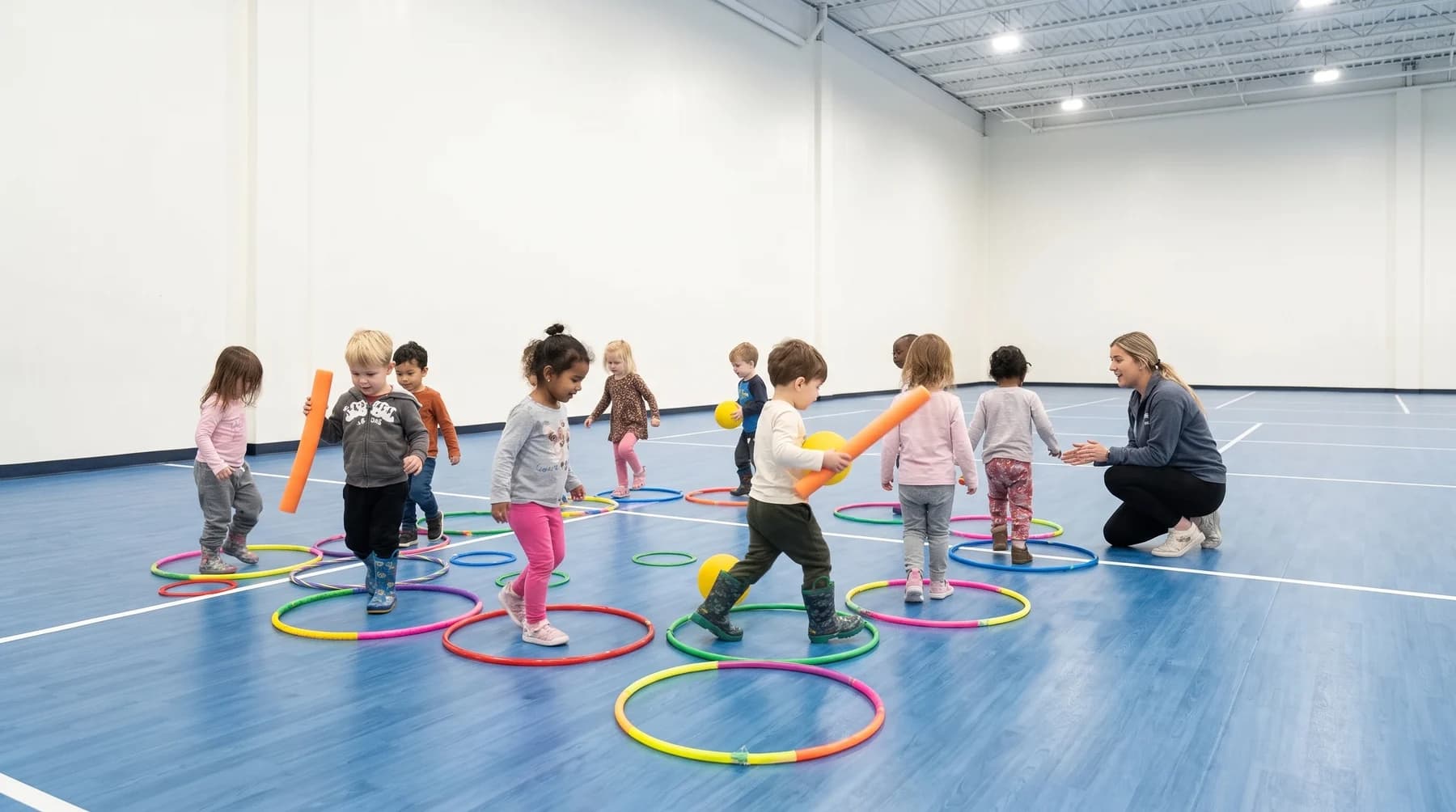
Move. A body that is confident and capable.
Every day, children build the fundamental movement skills that physical literacy is made of: running, jumping, climbing, throwing, catching, balancing, and dancing, plus the strength, coordination, and confidence to use them. Canada is a world leader in physical literacy, defined nationally as the motivation, confidence, physical competence, knowledge, and understanding to stay active for life. Most centres cannot deliver it. We built a 10,000 square foot room so we can, every day.
Before your child masters the alphabet ABCs, they need the physical ABCs.
Agility
Balance
Coordination
The physical ABCs are drawn from Canada's long-term athlete development framework. Source: Sport for Life.
Source: Canada's Physical Literacy Consensus Statement.
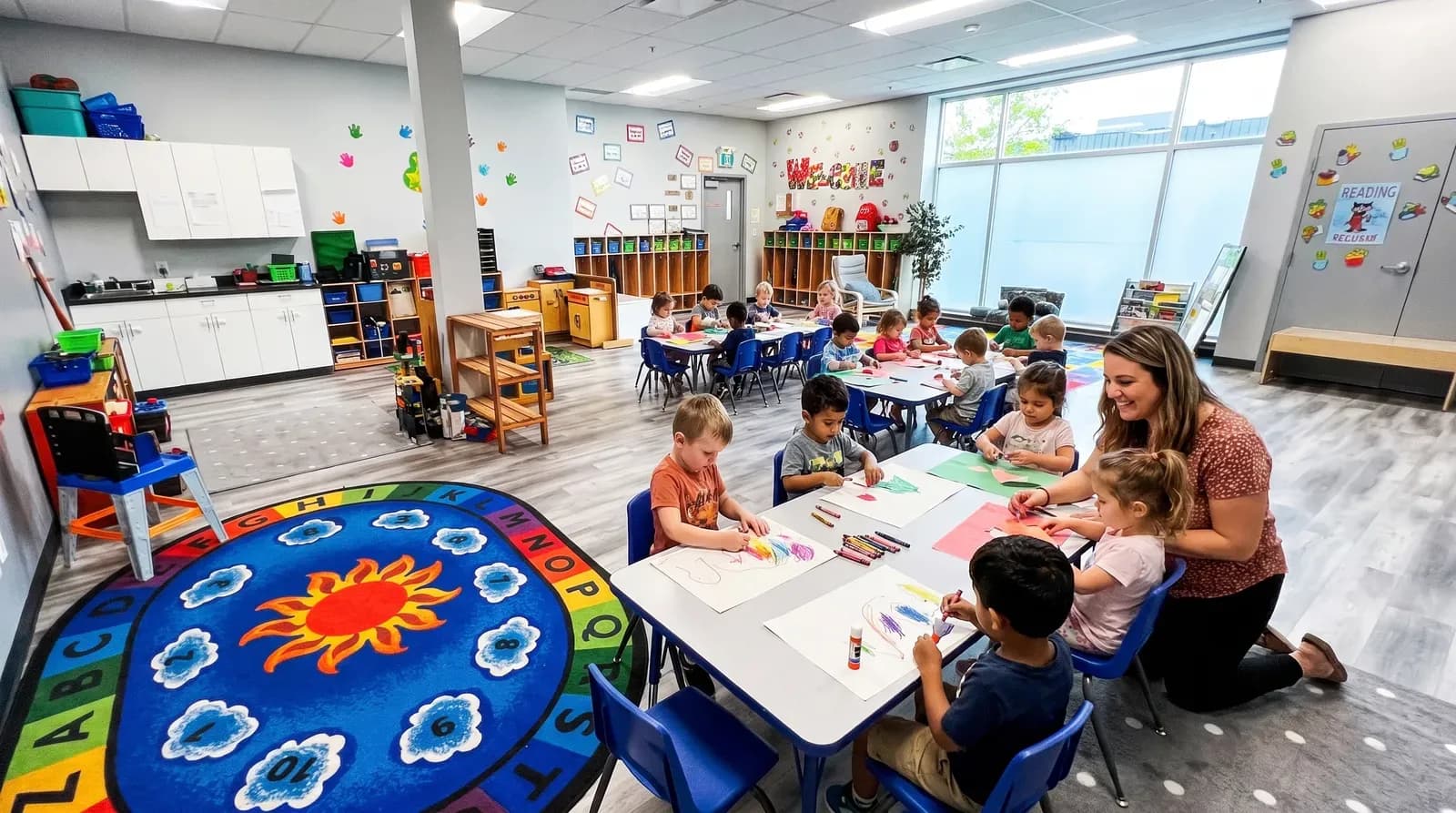
Discover. A mind that is ready for school.
Letters, sounds, numbers, patterns, science, nature, art, and language, taught through play and curiosity. And here is what most programs will not tell you: in the early years, how well a child moves is one of the strongest predictors of how well they think. Research finds that a young child's motor competence is more consistently linked to executive function, the attention and self-control school runs on, than the amount of time they spend active, and that the children who gain the most in motor skills over a year also gain the most in early numeracy. Movement is not the opposite of academics. It is the foundation underneath them.
Source: Cognitive Development; European Journal of Sport Science.
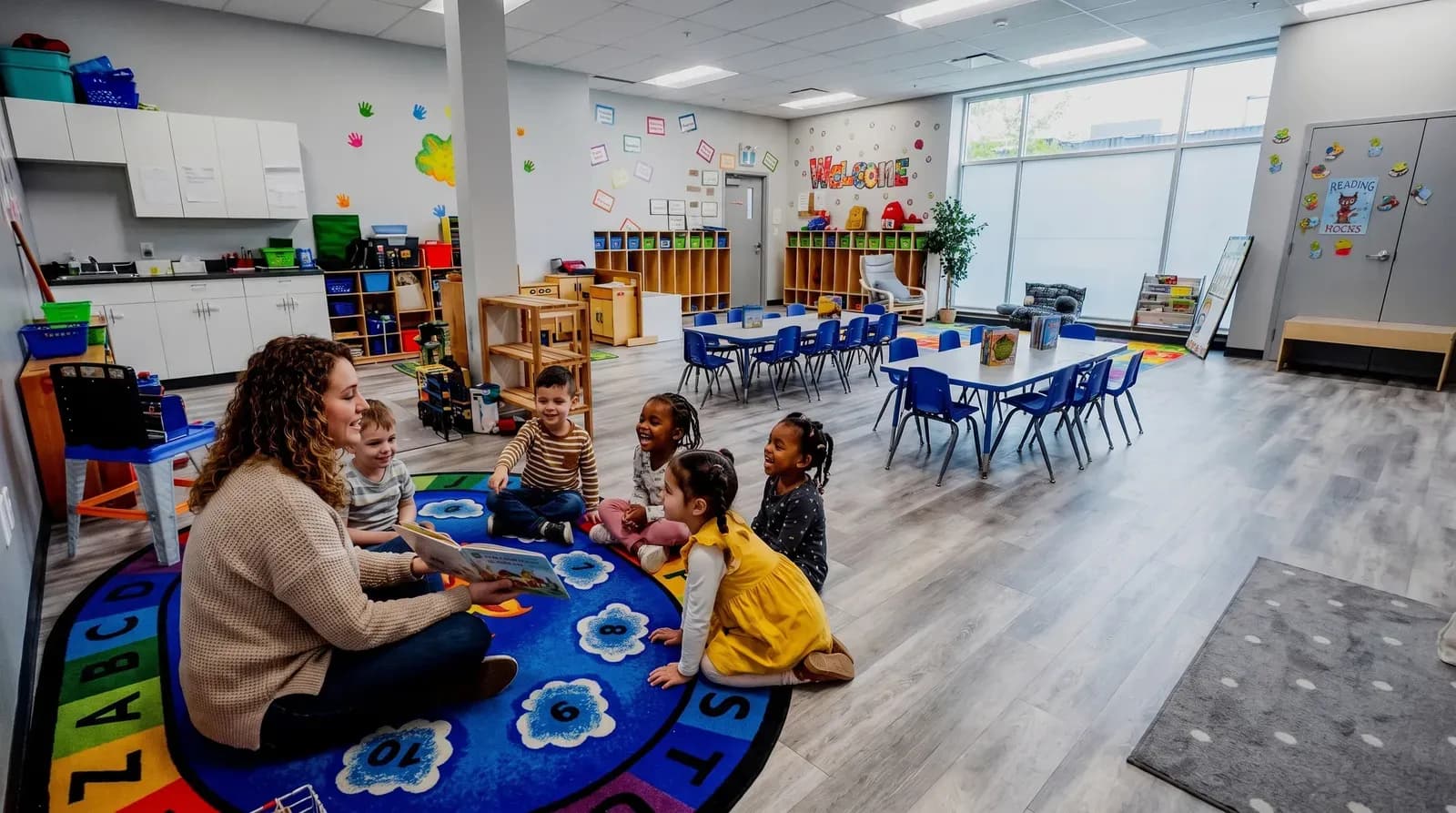
Belong. A child who is calm, confident, and known.
Turn-taking, cooperation, resilience, and emotional regulation, in a centre small enough that the director knows your child's name. Physical activity, positive mood, and self-regulation develop together in young children and reinforce one another, and self-regulation in the preschool years is one of the strongest predictors of later well-being.
Source: Journal of Experimental Child Psychology.
Move feeds Discover and Belong. That is the whole idea. A morning of climbing and balancing is not time away from learning. It is the engine that powers it.
What a morning actually looks like
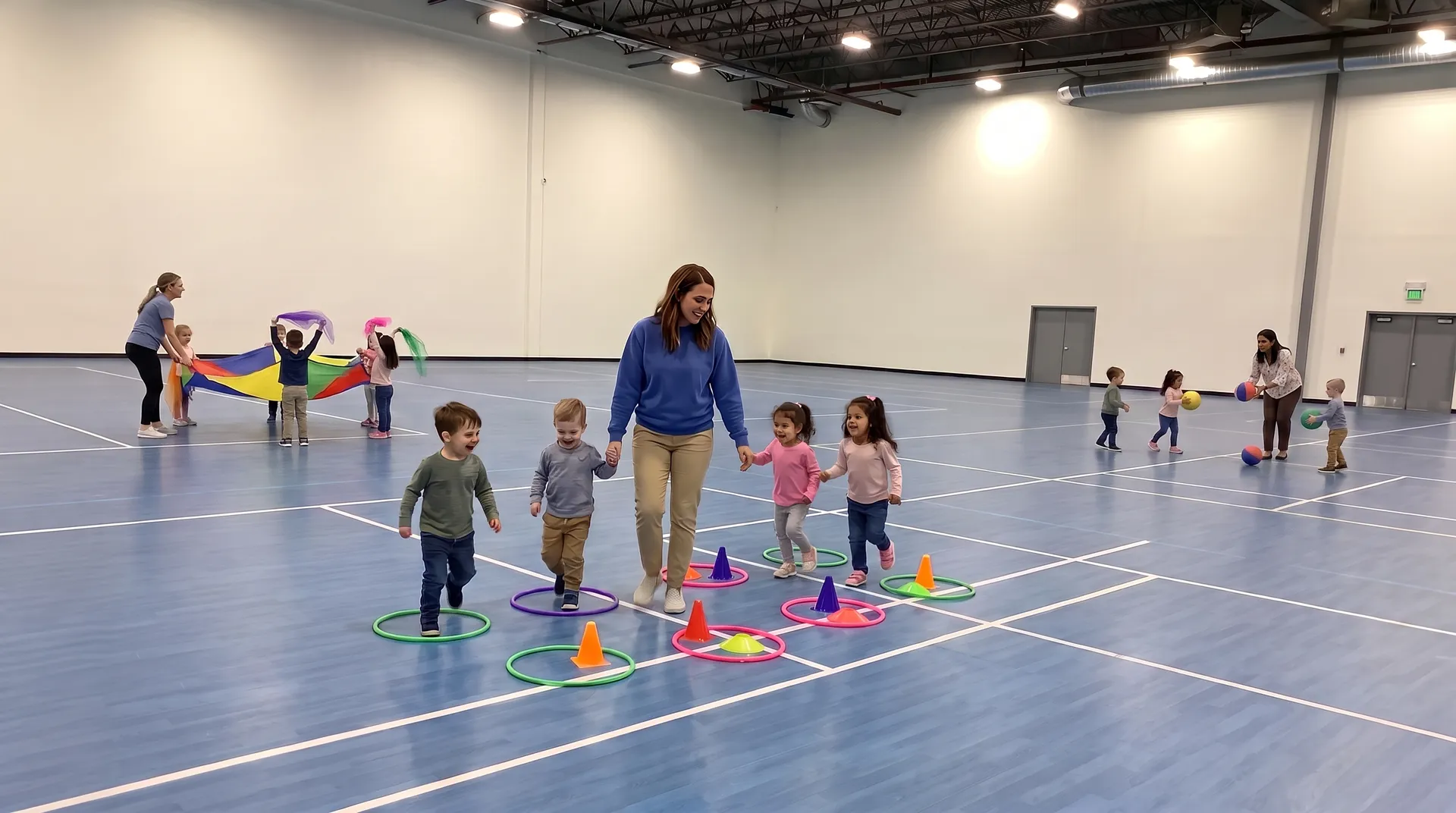
By 9:30, the 3 to 5 room is empty. The children are in the gymnasium.
One group is running an obstacle course, climbing over soft blocks, crawling through a tunnel, balancing along a low beam, and jumping off the end with both feet. An educator counts each jump out loud, and the counting is real math. Another group is throwing and catching, learning to track a ball with their eyes and time their hands, the same visual and coordination skills that will later help them read a line of print. In the corner, a parachute lifts and falls, and eight children learn to pull together, wait for the signal, and take their turn, which is cooperation and self-control disguised as a game.
No sitting still for an hour. No waiting for a turn on one small piece of equipment. Just space, and bodies that were built to use it.
Then they go back to the rooms, and they are ready. Ready to sit, to focus, to listen, to build, to count, and to create, because the body that has moved is the mind that can settle. This is the rhythm of every Playbox day, indoors, rain or shine, all year.
Yes, your child will be ready for kindergarten. More than ready.
A parent should never have to choose between a child who moves and a child who is ready. At Playbox, movement is what makes them ready. Inside The First Literacy, every child works on the whole picture of school readiness:
- Early literacy: letters, sounds, vocabulary, storytelling, and a love of books.
- Early numeracy: counting, patterns, shapes, sorting, and early problem solving.
- Curiosity and science: nature, cause and effect, and hands-on discovery.
- Creativity: art, music, dance, and dramatic play.
- Social readiness: following directions, cooperating, and resolving conflict with words.
All of it is delivered through play, by qualified early childhood educators, and aligned to British Columbia's Early Learning Framework. And all of it is reinforced by the movement that research links to stronger executive function, attention, and early numeracy in these exact years. Your child does not give up academics to get the gym. Your child gets sharper academics because of it.
Source: BC Early Learning Framework; Cognitive Development; European Journal of Sport Science.
The habits that protect a child for life start now
The early years are when a child decides, in their body, whether moving feels good and natural or awkward and hard. That decision tends to stick. Children who build physical competence and confidence early are far more likely to stay active as they grow, and an active childhood is one of the best-evidenced protections we have for lifelong physical and mental health.
Day to day, the benefits show up early. Active young children tend to concentrate better, cope better with stress, sleep better, and feel more confident in their own bodies. We are careful not to overpromise: the science on movement and young children's mental health is still developing, and Playbox is a childcare centre, not a clinic. But the direction of the evidence is clear, and it points at exactly what we do every day.
Source: peer-reviewed research on physical activity, mood, and self-regulation in early childhood.
Every day in the gymnasium, your child is building a body they trust, a brain that is ready to learn, and a relationship with movement that can protect their health for the rest of their life.
The curriculum by age
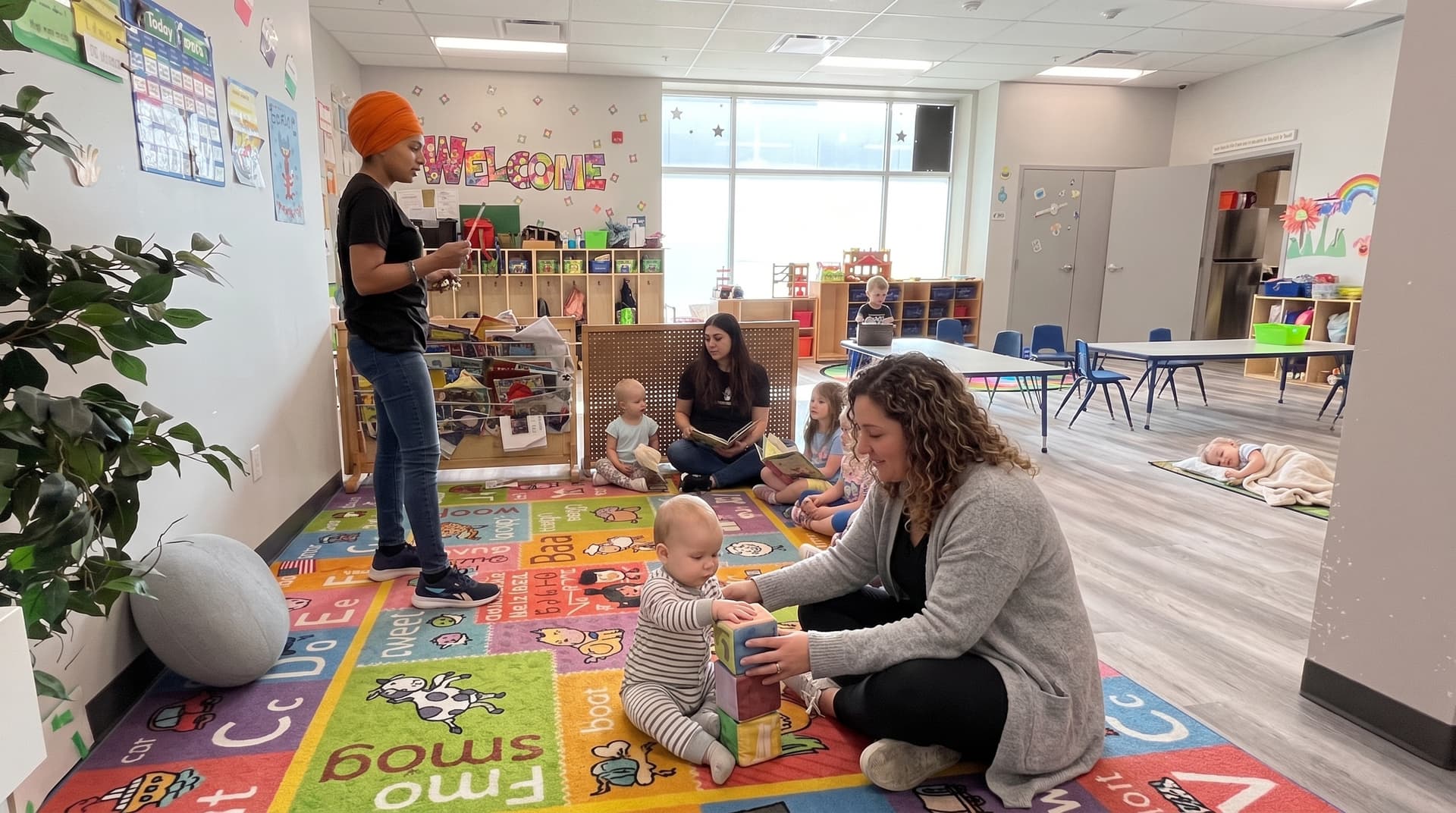
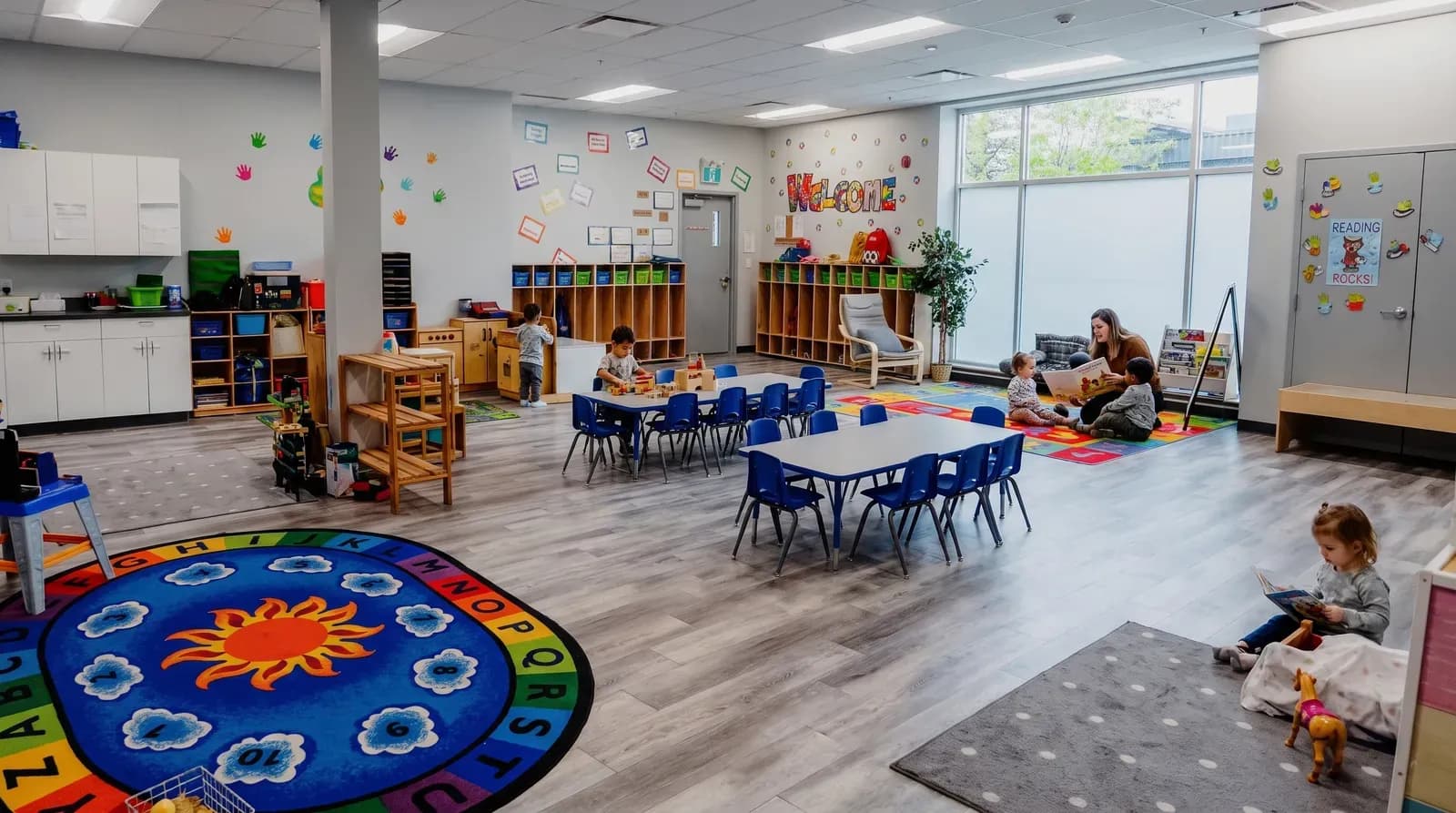
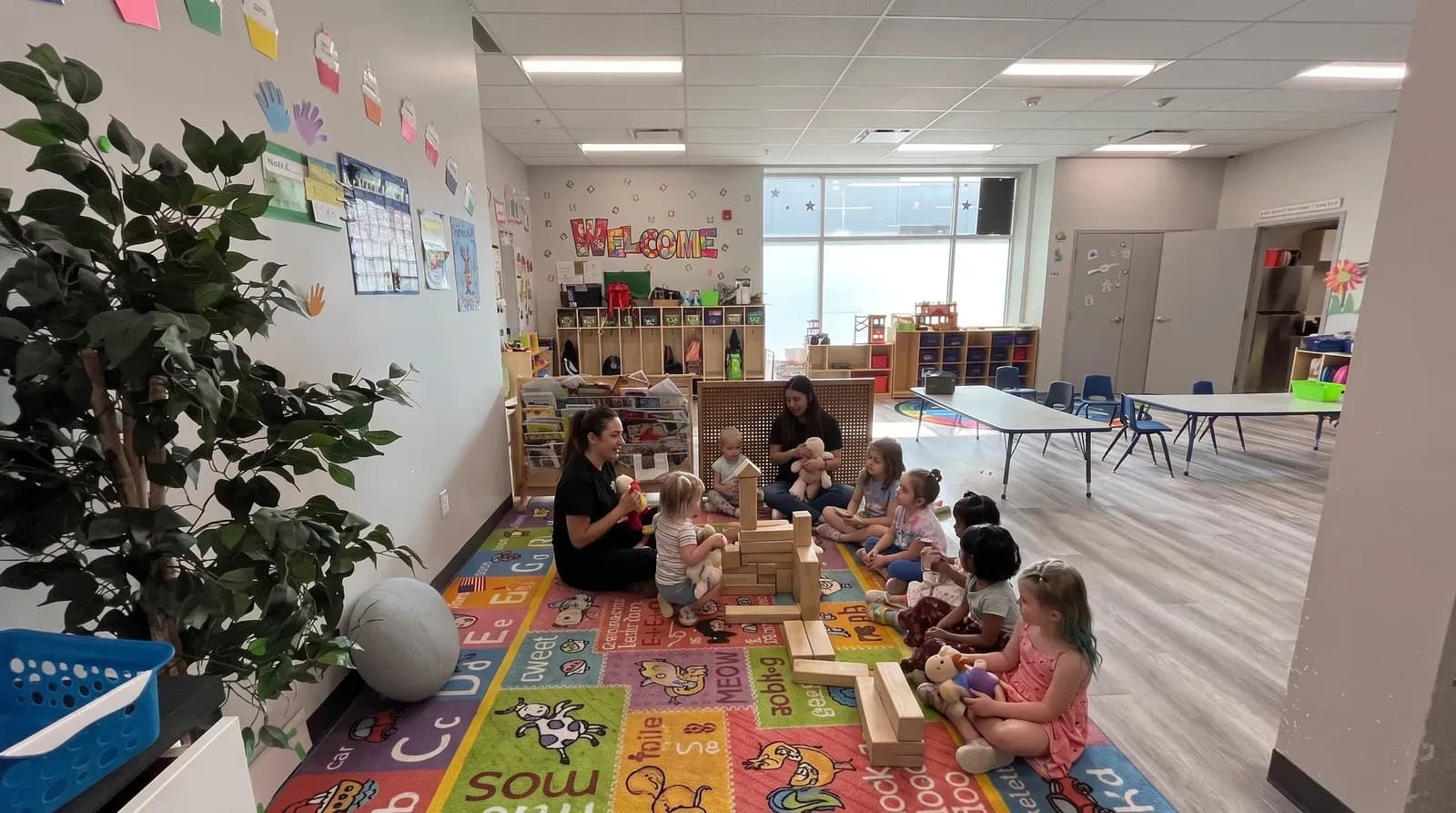
6-18 months
First Movers
First movers build the foundations of physical literacy: rolling, sitting, crawling, pulling up, and first steps.
- Head control and rolling
- Independent sitting and crawling
- Pulling to stand and first steps
- Pincer grasp and first words
18-36 months
Explorers
Walking becomes running, climbing, and the first throwing, kicking, and jumping, while language explodes.
- Running with control
- Jumping with two feet
- Kicking and throwing a ball
- Two-step directions and turn-taking
3-5 years
Movers and Shakers
Children master and combine fundamental movement skills while building the literacy, numeracy, and self-control kindergarten demands.
- Hopping, galloping, and balancing on one foot
- Throwing and catching with two hands
- Letters, sounds, counting, and patterns
- Sustained attention and resolving disputes with words
Questions parents ask about our curriculum
- What curriculum does Playbox use?
- Playbox uses The First Literacy, a play-based, movement-led approach aligned to British Columbia's Early Learning Framework. Children build early literacy, numeracy, and social skills, and spend part of every day being physically active in our 10,000 square foot gymnasium.
- Is Playbox play-based or academic?
- Both. Our curriculum is play-based and aligned to the BC Early Learning Framework, and it prepares children for kindergarten in literacy, numeracy, and social readiness. Daily movement is built in because research links motor skills in early childhood to stronger attention and early numeracy.
- How much physical activity do young children need?
- The Canadian 24-Hour Movement Guidelines recommend at least 180 minutes of activity a day for toddlers and preschoolers, including at least 60 minutes of energetic play for 3 to 4 year olds. Every licensed centre spends about an hour outside each day, and so do we. On top of that, we add up to about 120 minutes of real running, climbing, and active play indoors in our gymnasium, rain or shine.
- Will my child be ready for kindergarten?
- Yes. Every child works on early literacy, numeracy, curiosity, creativity, and social readiness, delivered through play by qualified early childhood educators, and reinforced by the daily movement that supports attention and self-regulation.
- What ages is the curriculum for?
- The First Literacy runs across all our programs: infants 6 to 18 months, toddlers 18 to 36 months, and childcare 3 to 5 years, plus weekend care.
Come stand in the gymnasium.
You can read about it, or you can watch your child run across it. Book a tour, meet the director, and see the 10,000 square foot difference for yourself. We will call you back within 24 hours. No pressure, no obligation.
Or call us at (604) 754-3799. Licensed childcare in Cloverdale, Surrey, for ages 6 months to 5 years, plus weekends.